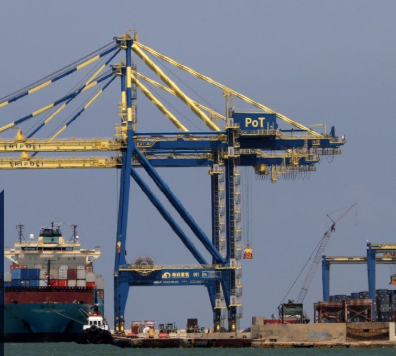
Infrastructure, Capacity, and Competitive Advantages
The port covers a large water and land area, includes extensive storage and rear zones, benefits from low taxes, affordable labor, and has significant expansion capacity with deep berths designed to accommodate large vessels. These features support both current operations and long-term growth.
Container Terminal Expansion and Gulftainer Concession
In 2012, Gulftainer received a 25-year concession to develop and operate a new container terminal, increasing capacity from 400,000 to 800,000 containers annually. Once completed, the terminal will handle some of the largest container ships in the eastern Mediterranean, easing pressure on the Port of Beirut and serving as an alternative to regional ports.
Global Shipping Presence and Regional Role
Since 2016, major international shipping companies such as CMA CGM, Maersk, UASC, Tarros, and Arkas have established a presence at the port, reflecting growing activity. Together with TSEZ, the port is expected to play a major role in Syria’s reconstruction and act as a strategic link on the Silk Road between East Asia and Europe.