The 100-Day Plan to Revitalize Tripoli Economically
Tripoli Special Economic Zone: A Strategic Vision for Economic Revival
The Chairman of the Tripoli Special Economic Zone (TSEZ), Dr. Hassan Dnaoui, confirmed that the zone is currently going through a "very good" phase. He noted direct government support from Prime Minister Nawaf Salam, alongside the active involvement of numerous relevant ministers, foremost among whom are the ministers of Economy, Public Works, Finance, Labor, and Industry. He explained that this support is coupled with the efforts of a "dedicated and active" board of directors that directly oversees the files at hand.
In an exclusive interview with Democratia News, Dnaoui stated that his connection to Tripoli is not merely professional, but stems from a "personal faith" in the city and its capabilities. He pointed out that while he always considered Tripoli to be "marginalized," it simultaneously possesses the foundations and assets that enable it to rise again. He added that the idea of reactivating the Special Economic Zone also came as a result of communication with the Prime Minister's office and the Minister of Economy, within the framework of an official directive to place Tripoli back on the national economic map. When asked about his vision for the TSEZ, Dnaoui said it will serve as the "economic lever" for the city first, and for Lebanon second, viewing the zone not just as an administrative project, but as an actual tool to stimulate the local economy, attract investments, and create job opportunities.
The "100-Day Plan" and Its Four Key Pillars
Regarding the "100-Day Plan" presented to the Prime Minister, Dnaoui explained that the goal was to demonstrate that the zone has a clear vision and a practical roadmap that can be executed within a specific timeframe. He noted that the plan rests on four main pillars:
Pillar 1: Independent Headquarters
The implementation began by securing independent offices for the economic zone on its own land, which was achieved by laying the foundation stone for the new headquarters.
Pillar 2: PPP Advisory
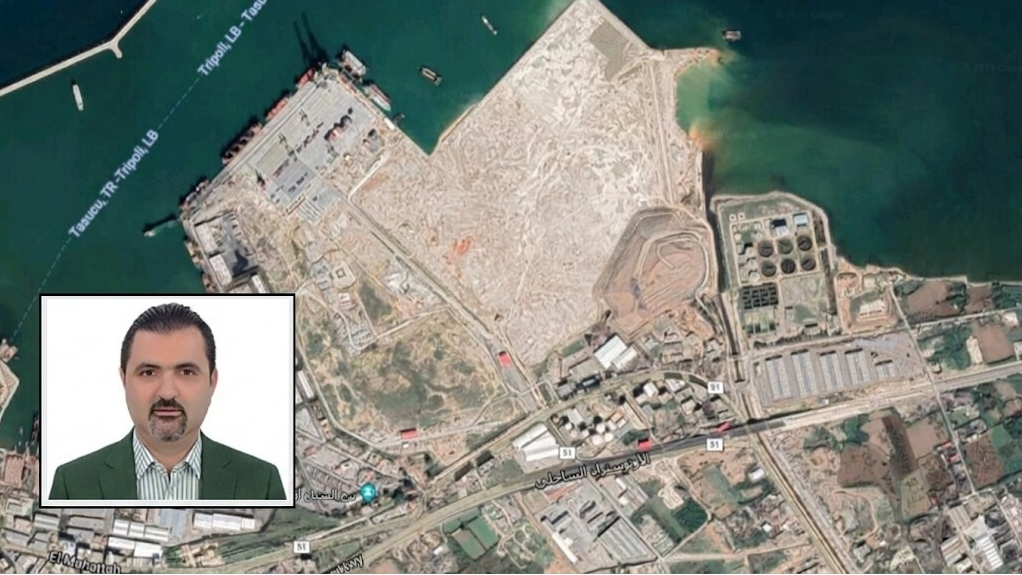
Appointing a specialized consultant for the Public-Private Partnership (PPP) file regarding the land adjacent to the Port of Tripoli. He clarified that KPMG, Dar Al-Handasah, and Mohamed Alem & Associates Law Firm have been appointed for this task. They will support the zone for approximately six months in developing the tender specifications (دفتر الشروط), evaluating previous studies completed in 2023, and guiding the bidding phase up to the awarding and signing of the contract.
Pillar 3: Revitalizing the Rachid Karami International Fair
Reviving the relationship between the economic zone and the Rachid Karami International Fair through the "Innovation and Knowledge Center" project on the fairgrounds. This is a joint project for the city, and preparations have reached their final stages prior to signing the agreement, paving the way for its launch very soon on an area of approximately 20,000 square meters.
Pillar 4: The One-Stop Shop
Developing the licensing system and the "One-Stop Shop" so that investors can benefit from financial and administrative incentives and secure licenses quickly without going through traditional procedures within state departments. Dnaoui stressed that this step could not have been achieved without the cooperation, support, and funding of the Port of Tripoli, in addition to the tender launched to appoint a specialized consultant for this system.
Institutional Support and Funding Challenges
Dnaoui highlighted the role of syndicates and economic bodies in the city, noting that the Order of Engineers in Tripoli, headed by Chairman Shawki Fatfat, and the Chamber of Commerce, Industry, and Agriculture in Tripoli and the North, led by Toufiq Dabboussi and its board of directors, provided financial and moral support for the projects. Furthermore, 32 private companies contributed to the fund designated for this purpose. He considered this support a reflection of serious faith among Tripoli's prominent figures in the project's chances of success.
On the obstacles facing the plan, Dnaoui stated that they have not been major so far, but funding remains the most prominent challenge, whether regarding the new headquarters or other operational and consultancy costs. He explained that some projects would not have been realized without contributions from the private company sector and supporting entities in the city.
Targeted Investments and Zonal Specialization
Regarding the nature of targeted investments, Dnaoui explained that the zone adjacent to the Port of Tripoli is primarily designated for logistical and industrial investments, particularly light and medium industries. This includes agro-food, wood, iron, aluminum, petrochemical, and pharmaceutical industries, as well as industrial assembly.
On the other hand, the second zone, linked to the Rachid Karami International Fair, is dedicated to non-industrial activities such as technology, artificial intelligence, and financial, administrative, and engineering services—"everything that is non-industrial," as he put any it. Dnaoui added that this concept transforms the economic zone into a diverse space that attracts companies and institutions from outside the city, helping to revitalize the Fair, operate its hotel, and stimulate economic activity throughout Tripoli.
Investment Incentives and Public Coordination
In terms of investment incentives, he explained that the economic zone offers extensive financial and tax exemptions. These include exemptions from several taxes and fees, corporate tax, income tax, employment tax, and social security contributions, while maintaining specific obligations related to health coverage and end-of-service indemnities. He noted that these incentives, along with the One-Stop Shop system, provide investors with a favorable and low-burden environment.
Dnaoui emphasized that cooperation with ministries and official institutions remains an essential element for the success of this plan. Work involves the ministries of Economy, Industry, Finance, Interior, Labor, and Agriculture, alongside water, electricity, and telecommunications institutions, as well as the Municipality of Tripoli, the Port of Tripoli, and the Rachid Karami International Fair. He pointed out that the relationship with these entities has become "highly cooperative" and is based on direct coordination across multiple files.
Regarding cooperation with the Port of Beirut, Dnaoui stated that integration among Lebanese ports is necessary. Since some shipping lines do not reach the Port of Tripoli but do reach Beirut, coordination between both ports serves the direct interest of companies and institutions operating within the Tripoli Special Economic Zone.
Timeline, Job Creation, and the Future of Tripoli
When asked about other projects and agreements in the pipeline, he clarified that the zone is currently focused on finalizing the two primary projects before moving to additional agreements. He hinted at upcoming cooperation protocols with syndicates and institutions, including the Lebanese Center for Arbitration and Mediation, aiming to adopt clear mechanisms for arbitration and mediation in commercial disputes.
On the timeline, Dnaoui expects tangible results to begin appearing next summer with the launch of the first bidding process for the "Innovation and Knowledge Center" project, hoping it will coincide with the bidding for the hotel. He noted that the project adjacent to the Port of Tripoli might see its bidding launched by the end of this year, with the contract awarded during the first quarter of 2027, provided things progress according to plan.
Regarding job creation, Dnaoui said that the zone adjacent to the port could provide between 3,000 and 4,000 jobs in phases over three to five years, offering direct and indirect opportunities in construction, operation, and employment. Meanwhile, the "Innovation and Knowledge Center" project could provide between 500 and 600 jobs in the technology, management, and services sectors. He stressed that these projects will not be limited to direct employment, but will positively impact the broader economic activity in Tripoli and the North, including retail, wholesale, services, transportation, and trade, ultimately creating an integrated economic cycle within the city.
A Message to Youth and the Impact of Qoleiat Airport
In his message to the youth of Tripoli, Dnaoui emphasized the importance of linking university and technical education with market needs. He revealed that a study titled "Skills Gap Analysis" is being prepared to identify the gap between the skills required in the economic zone and what universities and technical institutes are producing. He called on educational institutions to leverage this study and align their specializations with labor market demands. He noted that Tripoli used to suffer from a brain drain to Beirut and abroad due to the scarcity of job opportunities, but this equation is starting to change, as the city stands on the cusp of a new phase that could create genuine opportunities for its youth.
Regarding the impact of tendering and operating René Mouawad Air Base (Qoleiat Airport) on the economic zone, Dnaoui explained that operating part of the airport for air cargo, and linking it to the port and the economic zone via railway, will grant Tripoli and the North additional economic value—particularly in exports, logistics, and passenger movement. He pointed out that the airport's proximity to the city gives it a distinct advantage in terms of time and transit.
Actions, Not Words
Responding to those who feel that Tripoli has heard plenty of plans without execution, Dnaoui stated that people "have every right" to ask this question because what matters to them today are actions, not words. He stressed that the response will come through the actual commencement of projects during the summer, as execution alone delivers real positive signals.
He concluded by saying that the most crucial pledge to the people of Tripoli is that the city will witness a "serious project" taking off in the coming months. Success in this phase will serve as an indicator of Tripoli's return to its natural economic position.
Hanine Khalaf
Original Article